


Hybrid Cloud vs Multicloud: What’s the Difference and Which Model Fits Your Workloads?

A decade ago, the enterprise cloud decision often appeared relatively straightforward: determine what could move from the data centre to the public cloud. The infrastructure landscape is considerably more complex today. An enterprise may have an ERP platform closely connected to on-premises systems, customer applications running in a public cloud, regulated data that must remain within boundaries, edge workloads operating close to factories or branches, and new AI workloads requiring specialised infrastructure and services.

As a result, the question is shifting from which cloud an enterprise should choose to where each workload should run and why. That distinction is important when comparing hybrid cloud and multicloud. They describe different approaches, but for many large enterprises, they are no longer competing choices. Flexera's 2026 State of the Cloud research finds that 73% of organisations operate hybrid estates, while multicloud adoption also continues to increase.

Understanding the difference remains important, particularly for organisations shaping their cloud strategy. The more consequential decision, however, is how each model supports applications, data, regulatory requirements, operational dependencies and future technology needs.

Hybrid Cloud vs Multicloud: What Is the Difference?

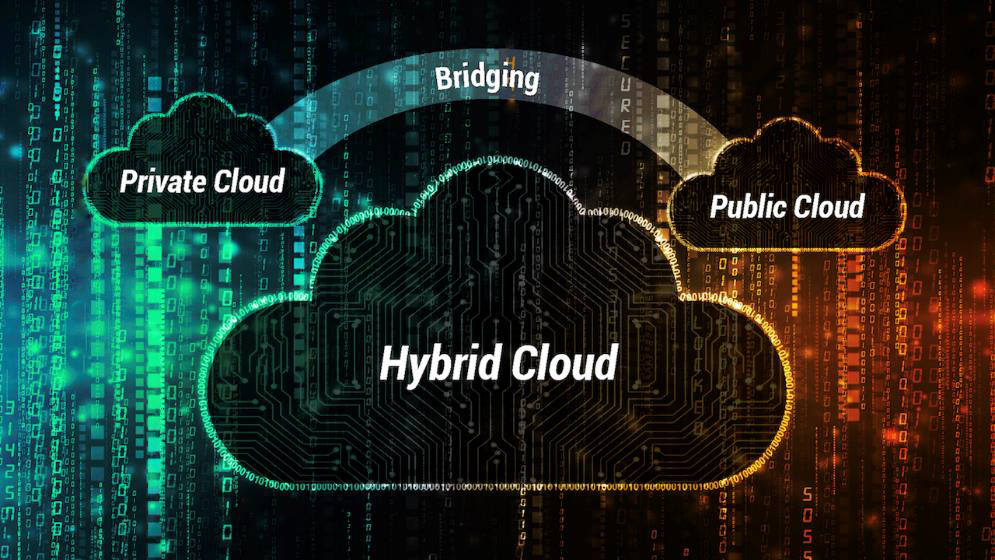
Hybrid cloud combines public cloud services with private or on-premises infrastructure in an integrated technology environment. An enterprise might retain certain databases, industrial systems or legacy applications within its own infrastructure while using public cloud services for other applications, analytics, development or scalable computing requirements.

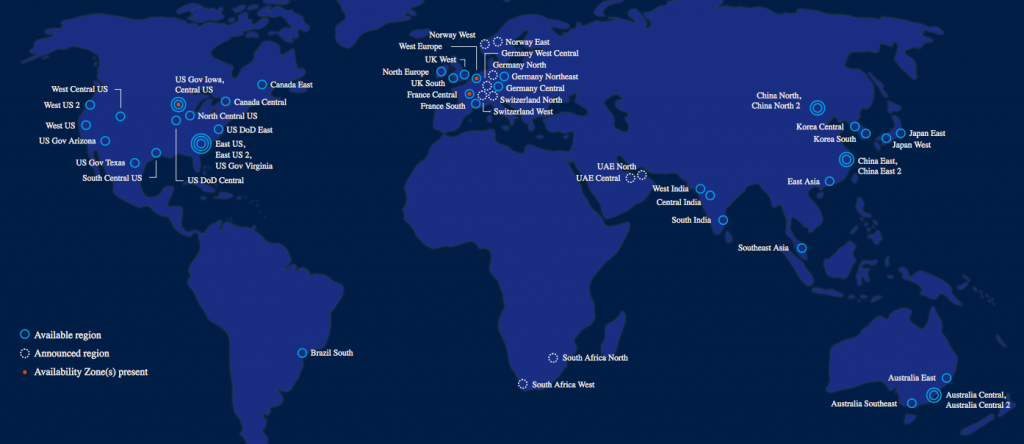
Multicloud refers to the use of cloud services from more than one public cloud provider. An organisation may run significant workloads across Microsoft Azure and AWS, for example, because different providers support different application, geographic or technology requirements.

These models are not mutually exclusive. An organisation using its own infrastructure alongside Azure is operating a hybrid model. If that organisation also runs workloads on AWS or another public cloud, its architecture can be considered hybrid multicloud.

This is increasingly representative of enterprise IT. Cloud architecture is becoming less about choosing a single deployment model and more about selecting the right environment for different workloads.

When Does Hybrid Cloud Make Sense?

The continued presence of on-premises infrastructure does not necessarily indicate that an organisation is behind in its cloud journey. Some workloads have legitimate reasons to remain close to existing infrastructure, data or physical operations.

A manufacturing application, for example, may need to process information close to production equipment where latency matters. A regulated organisation may require greater control over where particular datasets are stored or processed. A core business application may also have dependencies on systems that cannot yet be moved without disproportionate cost, disruption or risk.

Hybrid cloud can provide access to public cloud capabilities without requiring every workload to follow the same migration path. This is particularly relevant when enterprises balance cloud adoption and modernisation with existing operational realities.

The architectural decision should therefore consider whether an application's current location still supports the required business outcome and whether connecting it to cloud services creates additional value.

When Does Multicloud Make Sense?

Multicloud should have a clear reason to exist. Different hyperscalers have different service portfolios, geographic footprints, commercial models and specialised capabilities, which can create legitimate reasons for enterprises to use more than one provider.

A multinational organisation may require cloud services in particular regions. An application team may need a specialised platform capability. An acquisition may introduce a mature environment on another provider that would create little business value if immediately rebuilt elsewhere.

AI is adding another dimension to this decision. The expansion of generative and agentic AI is increasing demand for specialised compute, model services, data platforms and AI development capabilities. Enterprises may find that their preferred environment for traditional business applications is not automatically the preferred environment for every AI workload.

However, each additional provider introduces another platform teams must understand, operate, and support. The justification for multicloud should therefore extend beyond provider choice. A second or third cloud should address a meaningful business, regulatory or technical requirement that outweighs the additional architectural and operational complexity.

Workload Placement Should Drive the Architecture

The distinction between hybrid cloud and multicloud becomes more useful when you consider the decision at the workload level. A customer-facing digital service, a financial application, an industrial workload and an AI inference environment can have fundamentally different infrastructure requirements.

Instead of applying one deployment model across the application estate, enterprises can evaluate workload placement against a consistent set of criteria:

  • Data location and gravity: Where does the application's data reside, and what are the implications of moving large volumes of it between environments?
  • Latency and performance: Does the workload need to operate close to users, devices, data sources or other applications?
  • Regulatory and sovereignty requirements: Are there restrictions governing where information can be stored, processed or transferred?
  • Application dependencies: Which databases, APIs, legacy platforms and business systems does the workload depend on?
  • Platform capability: Does a particular cloud provide a service or capability that materially improves the application's outcome?
  • Resilience requirements: What availability, continuity and recovery characteristics does the business service require?
  • Portability: Is there a genuine business requirement for the workload to move between environments, or would portability introduce complexity without sufficient value?

This shifts cloud strategy away from provider preference and towards architecture based on workload characteristics. It also gives enterprises a more consistent framework for deciding what should remain on-premises, what should move to public cloud and where multiple cloud providers create meaningful value.

Data Gravity Is Becoming a Bigger Cloud Architecture Consideration

One of the easiest factors to underestimate in cloud architecture is data. Applications do not operate independently of the information they consume, and large datasets can be expensive, slow or operationally difficult to move repeatedly between environments.

Applications with close dependencies on existing enterprise data may therefore perform better when compute is brought closer to the data rather than moving the data to whichever cloud appears preferable for the application. This becomes particularly important when enterprises operate across on-premises infrastructure, public cloud platforms, SaaS environments and edge locations.

AI makes the relationship between data and workload placement even more significant. Training, retrieval, analytics and inference can require access to substantial volumes of enterprise information. Where that information resides can directly influence latency, architecture and economics.

For enterprises building AI into existing operations, cloud architecture is consequently becoming a data-placement decision as much as an infrastructure decision.

Digital Sovereignty Is Influencing Where Workloads Run

For multinational and regulated organisations, location is not merely a performance consideration. Data residency, sovereignty and sector-specific requirements can influence where applications and information are permitted to operate. Gartner's 2026 cloud-platform research identifies digital sovereignty among the factors increasingly shaping strategic cloud-provider selection.

This is particularly relevant for enterprises operating across multiple jurisdictions. A standard global architecture may require regional variations because regulatory obligations, cloud availability or data-handling requirements differ between markets.

Hybrid infrastructure can remain relevant where greater local control is required, while multiple public cloud providers can provide additional geographic or service options. Such variation does not necessarily indicate architectural inconsistency; when governed by clear requirements, it can reflect a deliberate cloud strategy.

How Much Workload Portability Does an Enterprise Really Need?

Avoiding vendor lock-in is frequently presented as one of the strongest arguments for multicloud. While portability can be strategically important, designing every application to move seamlessly between several cloud providers can add abstraction, engineering effort, and operational complexity. It can also limit an organisation's ability to use differentiated cloud-native services.

Enterprises should therefore distinguish between workload portability and strategic optionality. Some critical applications may justify a high degree of portability, while others may benefit more from being optimised for their chosen environment.

Strategic optionality can also be maintained without requiring every workload to run everywhere. Well-defined APIs, portable data practices, containers where appropriate, documented architecture and disciplined dependency management can help preserve future choices without unnecessarily constraining today's application design.

The objective is to avoid making important future technology decisions unnecessarily difficult, rather than engineering every workload for a migration that may never occur.

AI Is Changing the Hybrid and Multicloud Equation

AI could have been expected to accelerate an entirely public-cloud future. In practice, enterprise AI requirements are creating a more nuanced infrastructure landscape.

Models and AI services may be consumed from public cloud platforms while sensitive enterprise data remains in private environments. Inference may need to occur closer to users, factories or devices, while different cloud providers may offer capabilities suited to different models, data platforms or workloads.

Current industry research reflects this shift. Gartner identifies AI capabilities alongside hybrid and multicloud requirements, operational efficiency and digital sovereignty as factors influencing strategic cloud-platform selection. This implies that AI can make enterprise infrastructure more distributed, even as organisations seek greater consistency in how they manage it.

For cloud leaders, the priority is therefore not to force every AI workload into a preferred environment. It is to understand the relationship between models, compute, enterprise data, latency and regulatory requirements before deciding where those workloads should operate.

Hybrid Cloud, Multicloud or Both?

There is no universal winner between hybrid cloud and multicloud because they solve different architectural requirements. Hybrid cloud is appropriate when applications, data or operations need to span enterprise-controlled infrastructure and public cloud services. Multicloud is appropriate when multiple cloud providers deliver a justified business or technical advantage. Many large enterprises will operate both.

The more important question is whether those environments have been created intentionally. Cloud architecture should reflect application dependencies, data requirements, workload characteristics, regulatory constraints, resilience needs and access to differentiated technology capabilities rather than a preference for a particular deployment model.

Intertec helps enterprises assess their existing cloud estates, define workload-placement and cloud adoption strategies, and design hybrid and multicloud environments around business and application requirements. Intertec's cloud capabilities extend across cloud migration and modernisation, hybrid and multicloud environments, automation, governance, FinOps and managed cloud services, enabling organisations to evolve their cloud architecture as their requirements change.

The objective is not to move every workload to public cloud, distribute every application across multiple providers or preserve on-premises infrastructure by default. A more sustainable cloud strategy places each workload in the environment where it can deliver the required business value with an appropriate balance of performance, control, resilience, complexity and risk.

Thank you! Your submission has been received!
Oops! Something went wrong while submitting the form.
Related Topics

Cloud

Technology

AI & ML

Data Science

Hacking

Hybrid Cloud vs Multicloud: What’s the Difference and Which Model Fits Your Workloads?

Published:
July 16, 2025

A decade ago, the enterprise cloud decision often appeared relatively straightforward: determine what could move from the data centre to the public cloud. The infrastructure landscape is considerably more complex today. An enterprise may have an ERP platform closely connected to on-premises systems, customer applications running in a public cloud, regulated data that must remain within boundaries, edge workloads operating close to factories or branches, and new AI workloads requiring specialised infrastructure and services.

As a result, the question is shifting from which cloud an enterprise should choose to where each workload should run and why. That distinction is important when comparing hybrid cloud and multicloud. They describe different approaches, but for many large enterprises, they are no longer competing choices. Flexera's 2026 State of the Cloud research finds that 73% of organisations operate hybrid estates, while multicloud adoption also continues to increase.

Understanding the difference remains important, particularly for organisations shaping their cloud strategy. The more consequential decision, however, is how each model supports applications, data, regulatory requirements, operational dependencies and future technology needs.

Hybrid Cloud vs Multicloud: What Is the Difference?

Hybrid cloud combines public cloud services with private or on-premises infrastructure in an integrated technology environment. An enterprise might retain certain databases, industrial systems or legacy applications within its own infrastructure while using public cloud services for other applications, analytics, development or scalable computing requirements.

Multicloud refers to the use of cloud services from more than one public cloud provider. An organisation may run significant workloads across Microsoft Azure and AWS, for example, because different providers support different application, geographic or technology requirements.

These models are not mutually exclusive. An organisation using its own infrastructure alongside Azure is operating a hybrid model. If that organisation also runs workloads on AWS or another public cloud, its architecture can be considered hybrid multicloud.

This is increasingly representative of enterprise IT. Cloud architecture is becoming less about choosing a single deployment model and more about selecting the right environment for different workloads.

When Does Hybrid Cloud Make Sense?

The continued presence of on-premises infrastructure does not necessarily indicate that an organisation is behind in its cloud journey. Some workloads have legitimate reasons to remain close to existing infrastructure, data or physical operations.

A manufacturing application, for example, may need to process information close to production equipment where latency matters. A regulated organisation may require greater control over where particular datasets are stored or processed. A core business application may also have dependencies on systems that cannot yet be moved without disproportionate cost, disruption or risk.

Hybrid cloud can provide access to public cloud capabilities without requiring every workload to follow the same migration path. This is particularly relevant when enterprises balance cloud adoption and modernisation with existing operational realities.

The architectural decision should therefore consider whether an application's current location still supports the required business outcome and whether connecting it to cloud services creates additional value.

When Does Multicloud Make Sense?

Multicloud should have a clear reason to exist. Different hyperscalers have different service portfolios, geographic footprints, commercial models and specialised capabilities, which can create legitimate reasons for enterprises to use more than one provider.

A multinational organisation may require cloud services in particular regions. An application team may need a specialised platform capability. An acquisition may introduce a mature environment on another provider that would create little business value if immediately rebuilt elsewhere.

AI is adding another dimension to this decision. The expansion of generative and agentic AI is increasing demand for specialised compute, model services, data platforms and AI development capabilities. Enterprises may find that their preferred environment for traditional business applications is not automatically the preferred environment for every AI workload.

However, each additional provider introduces another platform teams must understand, operate, and support. The justification for multicloud should therefore extend beyond provider choice. A second or third cloud should address a meaningful business, regulatory or technical requirement that outweighs the additional architectural and operational complexity.

Workload Placement Should Drive the Architecture

The distinction between hybrid cloud and multicloud becomes more useful when you consider the decision at the workload level. A customer-facing digital service, a financial application, an industrial workload and an AI inference environment can have fundamentally different infrastructure requirements.

Instead of applying one deployment model across the application estate, enterprises can evaluate workload placement against a consistent set of criteria:

  • Data location and gravity: Where does the application's data reside, and what are the implications of moving large volumes of it between environments?
  • Latency and performance: Does the workload need to operate close to users, devices, data sources or other applications?
  • Regulatory and sovereignty requirements: Are there restrictions governing where information can be stored, processed or transferred?
  • Application dependencies: Which databases, APIs, legacy platforms and business systems does the workload depend on?
  • Platform capability: Does a particular cloud provide a service or capability that materially improves the application's outcome?
  • Resilience requirements: What availability, continuity and recovery characteristics does the business service require?
  • Portability: Is there a genuine business requirement for the workload to move between environments, or would portability introduce complexity without sufficient value?

This shifts cloud strategy away from provider preference and towards architecture based on workload characteristics. It also gives enterprises a more consistent framework for deciding what should remain on-premises, what should move to public cloud and where multiple cloud providers create meaningful value.

Data Gravity Is Becoming a Bigger Cloud Architecture Consideration

One of the easiest factors to underestimate in cloud architecture is data. Applications do not operate independently of the information they consume, and large datasets can be expensive, slow or operationally difficult to move repeatedly between environments.

Applications with close dependencies on existing enterprise data may therefore perform better when compute is brought closer to the data rather than moving the data to whichever cloud appears preferable for the application. This becomes particularly important when enterprises operate across on-premises infrastructure, public cloud platforms, SaaS environments and edge locations.

AI makes the relationship between data and workload placement even more significant. Training, retrieval, analytics and inference can require access to substantial volumes of enterprise information. Where that information resides can directly influence latency, architecture and economics.

For enterprises building AI into existing operations, cloud architecture is consequently becoming a data-placement decision as much as an infrastructure decision.

Digital Sovereignty Is Influencing Where Workloads Run

For multinational and regulated organisations, location is not merely a performance consideration. Data residency, sovereignty and sector-specific requirements can influence where applications and information are permitted to operate. Gartner's 2026 cloud-platform research identifies digital sovereignty among the factors increasingly shaping strategic cloud-provider selection.

This is particularly relevant for enterprises operating across multiple jurisdictions. A standard global architecture may require regional variations because regulatory obligations, cloud availability or data-handling requirements differ between markets.

Hybrid infrastructure can remain relevant where greater local control is required, while multiple public cloud providers can provide additional geographic or service options. Such variation does not necessarily indicate architectural inconsistency; when governed by clear requirements, it can reflect a deliberate cloud strategy.

How Much Workload Portability Does an Enterprise Really Need?

Avoiding vendor lock-in is frequently presented as one of the strongest arguments for multicloud. While portability can be strategically important, designing every application to move seamlessly between several cloud providers can add abstraction, engineering effort, and operational complexity. It can also limit an organisation's ability to use differentiated cloud-native services.

Enterprises should therefore distinguish between workload portability and strategic optionality. Some critical applications may justify a high degree of portability, while others may benefit more from being optimised for their chosen environment.

Strategic optionality can also be maintained without requiring every workload to run everywhere. Well-defined APIs, portable data practices, containers where appropriate, documented architecture and disciplined dependency management can help preserve future choices without unnecessarily constraining today's application design.

The objective is to avoid making important future technology decisions unnecessarily difficult, rather than engineering every workload for a migration that may never occur.

AI Is Changing the Hybrid and Multicloud Equation

AI could have been expected to accelerate an entirely public-cloud future. In practice, enterprise AI requirements are creating a more nuanced infrastructure landscape.

Models and AI services may be consumed from public cloud platforms while sensitive enterprise data remains in private environments. Inference may need to occur closer to users, factories or devices, while different cloud providers may offer capabilities suited to different models, data platforms or workloads.

Current industry research reflects this shift. Gartner identifies AI capabilities alongside hybrid and multicloud requirements, operational efficiency and digital sovereignty as factors influencing strategic cloud-platform selection. This implies that AI can make enterprise infrastructure more distributed, even as organisations seek greater consistency in how they manage it.

For cloud leaders, the priority is therefore not to force every AI workload into a preferred environment. It is to understand the relationship between models, compute, enterprise data, latency and regulatory requirements before deciding where those workloads should operate.

Hybrid Cloud, Multicloud or Both?

There is no universal winner between hybrid cloud and multicloud because they solve different architectural requirements. Hybrid cloud is appropriate when applications, data or operations need to span enterprise-controlled infrastructure and public cloud services. Multicloud is appropriate when multiple cloud providers deliver a justified business or technical advantage. Many large enterprises will operate both.

The more important question is whether those environments have been created intentionally. Cloud architecture should reflect application dependencies, data requirements, workload characteristics, regulatory constraints, resilience needs and access to differentiated technology capabilities rather than a preference for a particular deployment model.

Intertec helps enterprises assess their existing cloud estates, define workload-placement and cloud adoption strategies, and design hybrid and multicloud environments around business and application requirements. Intertec's cloud capabilities extend across cloud migration and modernisation, hybrid and multicloud environments, automation, governance, FinOps and managed cloud services, enabling organisations to evolve their cloud architecture as their requirements change.

The objective is not to move every workload to public cloud, distribute every application across multiple providers or preserve on-premises infrastructure by default. A more sustainable cloud strategy places each workload in the environment where it can deliver the required business value with an appropriate balance of performance, control, resilience, complexity and risk.

Ready to Take Control of Your Finances?

Thank you! Your submission has been received!
Oops! Something went wrong while submitting the form.
30 days free trail
No credit card required

A decade ago, the enterprise cloud decision often appeared relatively straightforward: determine what could move from the data centre to the public cloud. The infrastructure landscape is considerably more complex today. An enterprise may have an ERP platform closely connected to on-premises systems, customer applications running in a public cloud, regulated data that must remain within boundaries, edge workloads operating close to factories or branches, and new AI workloads requiring specialised infrastructure and services.

As a result, the question is shifting from which cloud an enterprise should choose to where each workload should run and why. That distinction is important when comparing hybrid cloud and multicloud. They describe different approaches, but for many large enterprises, they are no longer competing choices. Flexera's 2026 State of the Cloud research finds that 73% of organisations operate hybrid estates, while multicloud adoption also continues to increase.

Understanding the difference remains important, particularly for organisations shaping their cloud strategy. The more consequential decision, however, is how each model supports applications, data, regulatory requirements, operational dependencies and future technology needs.

Hybrid Cloud vs Multicloud: What Is the Difference?

Hybrid cloud combines public cloud services with private or on-premises infrastructure in an integrated technology environment. An enterprise might retain certain databases, industrial systems or legacy applications within its own infrastructure while using public cloud services for other applications, analytics, development or scalable computing requirements.

Multicloud refers to the use of cloud services from more than one public cloud provider. An organisation may run significant workloads across Microsoft Azure and AWS, for example, because different providers support different application, geographic or technology requirements.

These models are not mutually exclusive. An organisation using its own infrastructure alongside Azure is operating a hybrid model. If that organisation also runs workloads on AWS or another public cloud, its architecture can be considered hybrid multicloud.

This is increasingly representative of enterprise IT. Cloud architecture is becoming less about choosing a single deployment model and more about selecting the right environment for different workloads.

When Does Hybrid Cloud Make Sense?

The continued presence of on-premises infrastructure does not necessarily indicate that an organisation is behind in its cloud journey. Some workloads have legitimate reasons to remain close to existing infrastructure, data or physical operations.

A manufacturing application, for example, may need to process information close to production equipment where latency matters. A regulated organisation may require greater control over where particular datasets are stored or processed. A core business application may also have dependencies on systems that cannot yet be moved without disproportionate cost, disruption or risk.

Hybrid cloud can provide access to public cloud capabilities without requiring every workload to follow the same migration path. This is particularly relevant when enterprises balance cloud adoption and modernisation with existing operational realities.

The architectural decision should therefore consider whether an application's current location still supports the required business outcome and whether connecting it to cloud services creates additional value.

When Does Multicloud Make Sense?

Multicloud should have a clear reason to exist. Different hyperscalers have different service portfolios, geographic footprints, commercial models and specialised capabilities, which can create legitimate reasons for enterprises to use more than one provider.

A multinational organisation may require cloud services in particular regions. An application team may need a specialised platform capability. An acquisition may introduce a mature environment on another provider that would create little business value if immediately rebuilt elsewhere.

AI is adding another dimension to this decision. The expansion of generative and agentic AI is increasing demand for specialised compute, model services, data platforms and AI development capabilities. Enterprises may find that their preferred environment for traditional business applications is not automatically the preferred environment for every AI workload.

However, each additional provider introduces another platform teams must understand, operate, and support. The justification for multicloud should therefore extend beyond provider choice. A second or third cloud should address a meaningful business, regulatory or technical requirement that outweighs the additional architectural and operational complexity.

Workload Placement Should Drive the Architecture

The distinction between hybrid cloud and multicloud becomes more useful when you consider the decision at the workload level. A customer-facing digital service, a financial application, an industrial workload and an AI inference environment can have fundamentally different infrastructure requirements.

Instead of applying one deployment model across the application estate, enterprises can evaluate workload placement against a consistent set of criteria:

  • Data location and gravity: Where does the application's data reside, and what are the implications of moving large volumes of it between environments?
  • Latency and performance: Does the workload need to operate close to users, devices, data sources or other applications?
  • Regulatory and sovereignty requirements: Are there restrictions governing where information can be stored, processed or transferred?
  • Application dependencies: Which databases, APIs, legacy platforms and business systems does the workload depend on?
  • Platform capability: Does a particular cloud provide a service or capability that materially improves the application's outcome?
  • Resilience requirements: What availability, continuity and recovery characteristics does the business service require?
  • Portability: Is there a genuine business requirement for the workload to move between environments, or would portability introduce complexity without sufficient value?

This shifts cloud strategy away from provider preference and towards architecture based on workload characteristics. It also gives enterprises a more consistent framework for deciding what should remain on-premises, what should move to public cloud and where multiple cloud providers create meaningful value.

Data Gravity Is Becoming a Bigger Cloud Architecture Consideration

One of the easiest factors to underestimate in cloud architecture is data. Applications do not operate independently of the information they consume, and large datasets can be expensive, slow or operationally difficult to move repeatedly between environments.

Applications with close dependencies on existing enterprise data may therefore perform better when compute is brought closer to the data rather than moving the data to whichever cloud appears preferable for the application. This becomes particularly important when enterprises operate across on-premises infrastructure, public cloud platforms, SaaS environments and edge locations.

AI makes the relationship between data and workload placement even more significant. Training, retrieval, analytics and inference can require access to substantial volumes of enterprise information. Where that information resides can directly influence latency, architecture and economics.

For enterprises building AI into existing operations, cloud architecture is consequently becoming a data-placement decision as much as an infrastructure decision.

Digital Sovereignty Is Influencing Where Workloads Run

For multinational and regulated organisations, location is not merely a performance consideration. Data residency, sovereignty and sector-specific requirements can influence where applications and information are permitted to operate. Gartner's 2026 cloud-platform research identifies digital sovereignty among the factors increasingly shaping strategic cloud-provider selection.

This is particularly relevant for enterprises operating across multiple jurisdictions. A standard global architecture may require regional variations because regulatory obligations, cloud availability or data-handling requirements differ between markets.

Hybrid infrastructure can remain relevant where greater local control is required, while multiple public cloud providers can provide additional geographic or service options. Such variation does not necessarily indicate architectural inconsistency; when governed by clear requirements, it can reflect a deliberate cloud strategy.

How Much Workload Portability Does an Enterprise Really Need?

Avoiding vendor lock-in is frequently presented as one of the strongest arguments for multicloud. While portability can be strategically important, designing every application to move seamlessly between several cloud providers can add abstraction, engineering effort, and operational complexity. It can also limit an organisation's ability to use differentiated cloud-native services.

Enterprises should therefore distinguish between workload portability and strategic optionality. Some critical applications may justify a high degree of portability, while others may benefit more from being optimised for their chosen environment.

Strategic optionality can also be maintained without requiring every workload to run everywhere. Well-defined APIs, portable data practices, containers where appropriate, documented architecture and disciplined dependency management can help preserve future choices without unnecessarily constraining today's application design.

The objective is to avoid making important future technology decisions unnecessarily difficult, rather than engineering every workload for a migration that may never occur.

AI Is Changing the Hybrid and Multicloud Equation

AI could have been expected to accelerate an entirely public-cloud future. In practice, enterprise AI requirements are creating a more nuanced infrastructure landscape.

Models and AI services may be consumed from public cloud platforms while sensitive enterprise data remains in private environments. Inference may need to occur closer to users, factories or devices, while different cloud providers may offer capabilities suited to different models, data platforms or workloads.

Current industry research reflects this shift. Gartner identifies AI capabilities alongside hybrid and multicloud requirements, operational efficiency and digital sovereignty as factors influencing strategic cloud-platform selection. This implies that AI can make enterprise infrastructure more distributed, even as organisations seek greater consistency in how they manage it.

For cloud leaders, the priority is therefore not to force every AI workload into a preferred environment. It is to understand the relationship between models, compute, enterprise data, latency and regulatory requirements before deciding where those workloads should operate.

Hybrid Cloud, Multicloud or Both?

There is no universal winner between hybrid cloud and multicloud because they solve different architectural requirements. Hybrid cloud is appropriate when applications, data or operations need to span enterprise-controlled infrastructure and public cloud services. Multicloud is appropriate when multiple cloud providers deliver a justified business or technical advantage. Many large enterprises will operate both.

The more important question is whether those environments have been created intentionally. Cloud architecture should reflect application dependencies, data requirements, workload characteristics, regulatory constraints, resilience needs and access to differentiated technology capabilities rather than a preference for a particular deployment model.

Intertec helps enterprises assess their existing cloud estates, define workload-placement and cloud adoption strategies, and design hybrid and multicloud environments around business and application requirements. Intertec's cloud capabilities extend across cloud migration and modernisation, hybrid and multicloud environments, automation, governance, FinOps and managed cloud services, enabling organisations to evolve their cloud architecture as their requirements change.

The objective is not to move every workload to public cloud, distribute every application across multiple providers or preserve on-premises infrastructure by default. A more sustainable cloud strategy places each workload in the environment where it can deliver the required business value with an appropriate balance of performance, control, resilience, complexity and risk.